原創練習 · 情境選字

PET(B1)單字練習
8 個主題・64 題

作者:Christopher|埃森美語創辦人|美國密西根大學畢業、美國正式教師執照|最後更新

官方的 B1 Preliminary 字表同樣是劍橋出版的 PDF,我們只提供連結、不轉貼內容。B1 的字表約 3,000–3,200 個詞條,比 A2 多出將近一倍,難的不是字變長,而是抽象詞、片語動詞與固定介系詞明顯變多——這三類沒辦法靠中文翻譯記住,只能在句子裡練。下面每一題四個選項意思都相近,只有一個放進去讀得通,這正是 Reading Part 5 考字彙的方式。

官方字表:B1 Preliminary and B1 Preliminary for Schools Vocabulary List(2025 年 8 月版)(劍橋官方 PDF,版權屬 Cambridge University Press & Assessment,本頁只提供連結、不轉存內容)。官方字表約 3,000–3,200 個詞條,比 A2 多出將近一倍,抽象詞與片語動詞明顯變多。

B1 官方字表同樣按主題分組,主題family 與 A2 相近但範圍更廣、更抽象。

完整模擬試卷

想整份計時做完嗎?

這一頁的線上練習永遠免費。想整份計時做完,我們自己出了完整模擬試卷——題目卷、中文逐題解析、聽力音檔。線上刷卡不用離開這一頁,付款後檔案立刻寄到信箱。
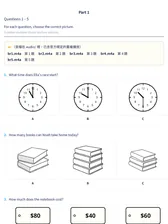
劍橋英檢模擬試題題目卷內頁
題目卷
劍橋英檢模擬試題逐題中文解析內頁
中文解析
聽力音檔波形
聽力音檔
劍橋英檢模擬試題口說圖卡內頁
口說圖卡
主題練習

把單字放回句子裡練

每一題都是一個句子,四個(或三個)選項意思相近,只有一個放進去讀得通。這正是考試考字彙的方式——不會問你中文意思,而是看你在句子裡認不認得出來。

01

健康與身體Health

健康這個主題最愛考的不是病名,而是搭配詞與形容詞的形式——have a cold、feel ill、harmful to,錯的通常是介系詞或詞性,不是字義。

做 8 題練習

1.I've had a bad ______ since yesterday and I keep sneezing.

A:✓ cold 當「感冒」時是可數名詞,a bad cold 是固定搭配,而且打噴嚏正是感冒的症狀。

B:✗ ill 是形容詞,不能接在 a bad 後面當名詞用。

C:✗ sick 同樣是形容詞,也不能放在 a bad 之後。

D:✗ fever 是「發燒」,是名詞沒錯,但發燒不會讓人一直打噴嚏,和後半句對不上。

2.You look pale. Are you feeling ______ ?

A:✓ feel 後面接形容詞,ill 正是形容詞,feel ill 是問身體不舒服的標準說法。

B:✗ illness 是名詞(疾病),不能直接接在 feel 後面。

C:✗ painful 形容「令人疼痛的事物」,人不能 feel painful——這是中文母語者最常見的錯誤說法之一。

D:✗ feel hurt 在英文裡指的是「心裡受傷」,不是身體不舒服。

3.The doctor gave me a ______ for some antibiotics.

A:✓ prescription 是醫生開的處方箋,拿去藥局領藥用的。

B:✗ recipe 是「食譜」,做菜用的——這兩個字長得像,是最經典的混淆組。

C:✗ receipt 是「收據」,付完錢才拿到。

D:✗ note 是「便條」,太籠統,開藥不會用這個字。

4.I've got a sore ______ , so it hurts when I swallow.

A:✓ throat 是「喉嚨」,吞東西會痛就是喉嚨痛,a sore throat 是固定說法。

B:✗ neck 指的是脖子的外部,脖子痛不會影響吞嚥。

C:✗ mouth 是「嘴巴」,嘴巴破通常說 a mouth ulcer,和吞嚥痛不同。

D:✗ stomach 是「胃」,胃痛和吞東西痛是兩種不同的症狀。

5.Smoking is extremely ______ to your health.

A:✓ harmful to something 是固定搭配,「對……有害」。

B:✗ hurtful 指的是「傷人的話或行為」,用在情感上,不用在健康。

C:✗ painful 是「疼痛的」,形容感覺本身,不能說某件事對健康 painful。

D:✗ damaged 是過去分詞當形容詞,指「已經受損的東西」,主詞不能是抽菸這件事。

6.He's been ______ a diet since January and has lost five kilos.

A:✓ be on a diet 是固定搭配,「在節食中」的介系詞只能用 on。

B:✗ in a diet 不是英文的說法。

C:✗ at a diet 同樣不存在。

D:✗ with a healthy diet 可以表示「憑藉健康飲食」,但「正在節食」固定用 on。

7.填入一個字:I couldn't sleep last night because I had a terrible ______ in my back.

身體某個部位持續的疼痛用 a pain in my back,說 an ache 也通。空格前的 a terrible 表示這裡需要一個可數名詞,所以形容詞 sore 或 painful 都不能填。

8.填入一個字:You should ______ a doctor if the cough doesn't go away.

「去看醫生」英文說 see a doctor,visit a doctor 也可以。中文的「看」直翻成 look at 或 watch 都是錯的,那兩個是「注視」的意思。

02

感受與個性Feelings and personality

這一組最常考的是 -ed 與 -ing 形容詞的差別(bored 對 boring),還有每個形容詞後面固定接哪個介系詞。中文沒有這兩種區別,所以要靠句子裡的主詞來判斷。

做 8 題練習

1.I was really ______ when I heard I'd passed the exam.

A:✓ relieved 是 -ed 形容詞,形容人「鬆一口氣」,主詞是 I 所以用這個。

B:✗ relieving 是 -ing 形,形容「令人鬆一口氣的事物」,不能形容人的感受。

C:✗ relief 是名詞,要說 It was a relief 才對,不能直接當形容詞。

D:✗ relaxed 是「放鬆的」,收到及格消息的當下是鬆一口氣,不是放鬆。

2.She's very ______ — she'll help anyone who asks.

A:✓ generous 是「慷慨、樂於付出的」,和「誰開口都幫」完全一致。

B:✗ greedy 是「貪心的」,意思相反。

C:✗ jealous 是「嫉妒的」,和願不願意幫忙無關。

D:✗ selfish 是「自私的」,也和後半句矛盾。

3.The film was so ______ that I fell asleep halfway through.

A:✓ boring 是 -ing 形容詞,形容事物讓人覺得無聊,主詞 The film 是事物。

B:✗ bored 是 -ed 形,形容人的感受,要說 I was bored,主詞不能是電影。

C:✗ boredom 是名詞「無聊」,不能接在 so 後面。

D:✗ bore 當動詞是「使人厭煩」,形式不對。

4.He gets ______ very easily — even a tiny mistake upsets him.

A:✓ get + -ed 形容詞表示情緒的變化,annoyed 是「感到惱怒的」,主詞是 He。

B:✗ annoying 形容「令人惱怒的人事物」,說 He is annoying 意思會變成他很煩人。

C:✗ annoyance 是名詞。

D:✗ annoy 是原形動詞,不能接在 gets 後面。

5.I'm looking ______ to seeing you next month.

A:✓ look forward to 是固定片語,to 後面接動名詞(seeing)。

B:✗ forwards 是方向副詞,這個片語固定用 forward,不加 s。

C:✗ look ahead 意思是「展望未來」,後面不接 to + Ving。

D:✗ front 不和 look 組成這個片語。

6.She's always been afraid ______ speaking in front of a large group.

A:✓ be afraid of +動名詞是固定搭配,介系詞是 of。

B:✗ afraid to 後面要接原形動詞(afraid to speak),和句中的 speaking 形式不合。

C:✗ about 用在 worried about、excited about,不與 afraid 搭配。

D:✗ afraid for someone 是「替某人擔心」,意思不同,也不接動名詞。

7.填入一個字:I was very ______ with my exam result — I had expected a much higher mark.

成績比預期低,人的感受用 -ed 形容詞 disappointed(失望的),後面固定接介系詞 with。填 disappointing 是錯的,那是形容「令人失望的事情」。

8.填入一個字:Don't worry ______ the test — you've studied really hard.

worry 後面固定接介系詞 about。中文說「擔心考試」中間沒有任何字,所以最常見的錯是直接寫成 worry the test。

03

金錢與消費Money and shopping

錢的動詞是一整組陷阱:cost 的主詞是東西,spend 的主詞是人,afford 直接接東西,pay 要看有沒有 for。搞清楚誰當主詞,這一組就不會錯。

做 8 題練習

1.These jeans were a real ______ — only three hundred dollars.

A:✓ bargain 是名詞,指「買到的便宜好貨」,a real bargain 是固定說法。

B:✗ cheap 是形容詞,不能接在 a real 後面。

C:✗ discount 是「折扣」這件事,不是指買到的東西本身。

D:✗ sale 是「特價活動」,要說 on sale,不能說 a real sale 指這件商品。

2.I can't ______ a new phone this year.

A:✓ afford 是「負擔得起」,後面直接接東西,主詞是人。

B:✗ cost 的主詞必須是東西:The phone costs a lot。

C:✗ spend 後面要接金額或時間:spend 20,000 dollars on a phone。

D:✗ pay 要說 pay for a new phone,少了 for 就不成句。

3.How much did you ______ for those trainers?

A:✓ pay for something 是「為某物付錢」,句子裡的 for 就是它的搭配。

B:✗ cost 的主詞是東西,不能問 you cost。

C:✗ spend 的介系詞是 on 不是 for:How much did you spend on those trainers。

D:✗ buy 後面直接接東西,不接 for 表示金額。

4.The shop will give you a ______ if the shirt doesn't fit.

A:✓ refund 是「退款」,give someone a refund 是固定搭配。

B:✗ return 當名詞是「退貨」這個動作,商店不會 give you a return。

C:✗ change 是「找零」,指付現金後找回來的錢,和退貨無關。

D:✗ receipt 是「收據」,是退貨時要出示的東西,不是店家給的補償。

5.I paid ______ card because I'd left my cash at home.

A:✓ pay by card 是固定搭配,付款方式用 by。

B:✗ in 用在 pay in cash,指的是現金這個形式。

C:✗ with 後面要有冠詞或所有格:pay with a credit card、pay with my phone 都對;但這裡 card 前面沒有冠詞,這個形式只能用 pay by card。

D:✗ on 不和 pay 組成這個意思。

6.That jacket is ______ expensive — I'm not paying that much.

A:✓ far too + 形容詞表示「太過……了」,far 是用來加強 too 的。

B:✗ too much 後面接名詞或動詞,不能直接修飾形容詞 expensive。

C:✗ very much 不能修飾形容詞。

D:✗ so much 同樣不能直接放在形容詞前面。

7.填入一個字:I'm saving ______ my pocket money for a new laptop, so I'm not going out much this month.

save up for something 是「為了買某樣東西存錢」的片語動詞,副詞固定是 up。B1 開始片語動詞的數量明顯變多,這一類要連副詞一起背。

8.填入一個字:The concert tickets are quite ______ — about two thousand dollars each.

價格高,形容票本身用 expensive。中文的「很貴」常被直翻成 high,但 high 只能形容 price(The price is high),不能拿來形容票。

04

環境與自然The environment

環境是 B1 閱讀與寫作最常出現的題材之一。這一組的難點在片語動詞(cut down on、break down)和固定術語(climate change),字面猜通常會猜錯。

做 8 題練習

1.Plastic bottles take hundreds of years to ______ in the ground.

A:✓ break down 講材料時是「分解」,正是塑膠在土裡發生的事。

B:✗ break up 是「分手」或「把東西打散成幾塊」。

C:✗ break in 是「闖空門」。

D:✗ break out 是「(戰爭、火災)爆發」。

2.Air ______ in big cities is getting worse every year.

A:✓ pollution 是名詞「污染」,air pollution 是複合名詞,當整句的主詞。

B:✗ polluted 是形容詞「受污染的」,不能當主詞。

C:✗ pollute 是動詞原形。

D:✗ polluting 是動名詞或現在分詞,air polluting 不是英文的組合。

3.Turning off the lights is a simple way to ______ energy.

A:✓ save energy 是固定搭配,「節省能源」。

B:✗ spare 是「勻出、抽出」(spare a moment),不與 energy 搭配成這個意思。

C:✗ keep 是「保留」,keep energy 不是英文的說法。

D:✗ hold 是「握住、容納」,同樣不搭配。

4.Many wild animals are now in ______ of disappearing forever.

A:✓ in danger of + 動名詞是固定搭配。

B:✗ risk 的搭配是 at risk of,介系詞不同。

C:✗ threat 的搭配是 under threat,介系詞也不同。

D:✗ dangerous 是形容詞,不能接在 in 後面。

5.The government has ______ a new law about plastic bags.

A:✓ introduce a law 是「頒布、開始實施法律」的標準搭配。

B:✗ invent 是「發明」,用在原本不存在的東西或機器。

C:✗ produce 是「生產」,用在製造商品。

D:✗ discover 是「發現」原本就存在的事物,法律是人訂的,不是被發現的。

6.Solar power is a ______ source of energy — the sun isn't going to run out.

A:✓ renewable 是「可再生的」,renewable energy 是這個領域的固定用語。

B:✗ returnable 是「可退還的」,用在商品或容器。

C:✗ repeatable 是「可重複進行的」,用在實驗或動作。

D:✗ refillable 是「可再裝填的」,用在瓶子或墨水匣。

7.填入一個字:We all need to cut ______ on the amount of plastic we use.

cut down on 是「減少用量」的片語動詞,cut back on 意思相同,兩個都算對。只有這兩個副詞能搭配後面的 on 表達這個意思。

8.填入一個字:Climate ______ is one of the biggest problems our generation faces.

「氣候變遷」的固定術語是 climate change,是一個複合名詞。寫成 changing 或 changes 都不是這個術語的形式——專有術語要整組記。

05

媒體與科技Media and technology

科技詞看起來簡單,但方向詞(upload/download)和片語動詞(log in、turn off)錯了就整題不對,而且這些字在聽力裡出現的頻率非常高。

做 8 題練習

1.I couldn't ______ the file onto the school website because the internet was too slow.

A:✓ upload 是把檔案「上傳」到網站,句中的 onto the website 指的就是這個方向。

B:✗ download 是從網路下載到自己的裝置,方向剛好相反。

C:✗ load 單獨用時是「載入」(The page won't load),要表達「往網站上傳」這個方向必須加 up-。

D:✗ unload 是「卸貨」,用在車子或船。

2.She ______ a photo of her dinner on Instagram last night.

A:✓ post 在社群媒體上是「發文、上傳」,是這個情境的專用動詞。

B:✗ send 是「傳送給某個人」,貼在公開平台上不用這個字。

C:✗ write 用在文字,照片不能 write。

D:✗ print 是「列印」,和上傳到網路無關。

3.Please ______ your phone before the film starts.

A:✓ turn off 是「關掉電源」。

B:✗ turn down 是「調小聲」,手機還是開著的。

C:✗ turn up 是「調大聲」,或「(人)出現」。

D:✗ turn over 是「翻面」,用在紙張或食物。

4.I get most of my news ______ my phone rather than from newspapers.

A:✓ 在裝置上看到內容用 on:on my phone、on TV、on the internet。

B:✗ in 用在實體出版品:in the newspaper、in a magazine。

C:✗ at 用在地點,不用在裝置。

D:✗ to 表示方向,和「在哪裡看」無關。

5.There's a lot of ______ information online, so you have to check where it came from.

A:✓ misleading 是「會誤導人的」,形容資訊本身,是這個主題的關鍵字。

B:✗ missing 是「遺失的、缺少的」,不是「不正確的」。

C:✗ mistaken 通常形容人(You are mistaken),不太用來形容 information。

D:✗ misunderstood 是「被誤解的」,重點在讀的人,不在資訊本身。

6.The programme was so popular that they made a second ______ .

A:✓ series 是電視「一季/一整套節目」,a second series 就是第二季。

B:✗ serial 是「連載劇」,指節目的類型,不是季數。

C:✗ sequence 是「順序、一連串」,不用在節目季數。

D:✗ session 是「一場、一節」,用在課程或會議。

7.填入一個字:Can you log ______ to the school system and check tomorrow's timetable?

登入系統是 log in(也可以說 log on);log out 或 log off 是登出,方向相反。片語動詞要連著副詞一起記,只記 log 沒有用。

8.填入一個字:The app is free to ______ , but you have to pay for the extra features.

從商店把 app 取得到手機上是 download。空格前的 free to 後面接原形動詞,所以 downloading 是錯的形式。

06

旅行與交通Travel and transport

旅行的字彙在 B1 幾乎每一份考卷都出現。難的不是單字,是搭配:miss a flight、check in、fully booked、hand luggage,這些都是整組固定的說法。

做 8 題練習

1.We ______ our flight because we got stuck in traffic on the way to the airport.

A:✓ miss a flight 是「趕不上班機」的固定搭配。

B:✗ lose 用在「弄丟東西」,班機不是被弄丟的。

C:✗ fail 是「失敗、不及格」,不和班機搭配。

D:✗ drop 是「掉落」,語意完全不合。

2.You need to ______ in at least two hours before an international flight.

A:✓ check in 是機場或飯店的「報到」,是旅行情境的固定片語動詞。

B:✗ sign in 用在訪客登記簿,不用在機場。

C:✗ log in 用在電腦系統。

D:✗ book 是「預訂」,是出發前很久就做的事,不會用 book in 表示報到。

3.The hotel was fully ______ , so we had to find somewhere else to stay.

A:✓ fully booked 是「訂滿了」的固定說法。

B:✗ filled 用在容器裝滿東西,不用在住房。

C:✗ taken 可以說單一房間 is taken,但整間飯店客滿固定用 fully booked。

D:✗ closed 是「(店家)關門」,和有沒有空房是兩回事。

4.Our train was ______ , so we waited on the platform for almost an hour.

A:✓ delayed 是「被延誤」,被動形式,主詞是列車。

B:✗ waited 的主詞必須是人,列車不會 wait 乘客一小時。

C:✗ stayed 是「停留」,語意不對。

D:✗ remained 是「維持某個狀態」,後面要接補語。

5.Do you have any ______ luggage, or just this suitcase to check in?

A:✓ hand luggage 是「隨身行李」的固定說法(美式也說 carry-on)。

B:✗ arm luggage 不存在。

C:✗ small luggage 文法沒錯但不是這個情境的專有說法,機場只用 hand luggage。

D:✗ light luggage 指「輕的行李」,和能不能帶上飛機是兩回事。

6.We stayed in a small ______ house in the countryside for three nights.

A:✓ guest house 是「民宿、小旅館」的固定複合名詞。

B:✗ visitor house 不是英文的組合。

C:✗ tourist 可以組成 tourist information,但沒有 tourist house 這個說法。

D:✗ traveller 是「旅人」這個人,不能組成住宿的名稱。

7.填入一個字:I'd like a return ______ to Taichung, please.

return ticket 是「來回票」,single ticket 是單程票。買票時 return 是形容詞,後面必須有名詞 ticket,不能單獨說 a return to Taichung。

8.填入一個字:The journey ______ us about three hours by high-speed rail.

講「花多少時間」時,主詞是行程或事情就用 take。中文的「要三小時」常被直翻成 needs 或 spends——spend 的主詞一定要是人,這裡主詞是 journey,所以不行。

07

工作與學業Work and study

這一組是寫作 Part 1 的常客。experience 可數不可數、apply for 的介系詞、attend 不是「協助」——三個都是台灣學生高頻失分點。

做 8 題練習

1.She's applying ______ a job at a design company in Taipei.

A:✓ apply for +職缺或名額是固定搭配,介系詞是 for。

B:✗ apply to 後面接機構或學校(apply to a university),不接職缺本身。

C:✗ 沒有 apply on 這個組合。

D:✗ apply with 是「附上某樣東西應徵」(apply with a CV),不是應徵的對象。

2.I have to ______ my essay by Friday afternoon.

A:✓ hand in 是「繳交(作業)」給老師。

B:✗ hand out 是「分發」給很多人,方向相反。

C:✗ hand over 是「移交(權力或東西)」,語氣正式且不用在作業。

D:✗ hand back 是「發還」,是老師改完之後做的事。

3.He got the job because he had a lot of ______ in customer service.

A:✓ experience 當「工作經驗」時是不可數名詞,所以 a lot of 後面不加 s。

B:✗ experiences 加了 s 變成「一件件的經歷」,指的是難忘的事件,不是工作資歷。

C:✗ experiment 是「實驗」。

D:✗ expert 是「專家」,是人,不能接在 a lot of 後面。

4.She's very ______ — she's never late and always finishes what she starts.

A:✓ reliable 是「可靠的」,形容人值得信賴。

B:✗ reliant 是「依賴的」(reliant on someone),意思幾乎相反。

C:✗ relying 是動名詞或現在分詞,形式不對。

D:✗ reliance 是名詞「依賴」。

5.The company offered him a ______ of sixty thousand dollars a month.

A:✓ salary 是按月或按年計的固定薪水,句中的 a month 正好指向它。

B:✗ wages 是複數形,不能接在冠詞 a 後面;而且 wage(s) 指的是按時或按週計算的工資。

C:✗ fee 是專業服務的收費,例如律師費、學費。

D:✗ price 是商品的價格,不用在薪水。

6.You'll need to ______ an interview before they decide.

A:✓ attend 是「出席」,attend an interview/a meeting 是標準搭配。

B:✗ assist 是「協助」,不是「出席」——這是法文 assister à、西班牙文 asistir a 的假朋友,英文的 assist 沒有出席的意思。

C:✗ join 是「加入(團體)」,不用在單一場合。

D:✗ participate 後面要接 in,而且指「參與活動」,語感不合面試。

7.填入一個字:I'm studying ______ my final exams at the moment, so I can't come out.

study for an exam 是「為了考試而讀書」的固定搭配,介系詞是 for。中文說「準備考試」沒有介系詞,所以最常見的錯是直接寫 studying my final exams。

8.填入一個字:He was ______ from his job last month because he kept arriving late.

因為個人表現或行為被解僱,用被動:was fired(美式常用)、was sacked(英式口語)或 was dismissed(正式)。空格前有 was、後面有 from,所以必須是過去分詞。注意:公司裁員不是這幾個字,那要說 was made redundant 或 was laid off。

08

休閒與運動Free time and sport

休閒主題最愛考固定介系詞:keen on、interested in、fond of、good at。這四個沒有規律可循,只能一組一組連介系詞背下來。

做 8 題練習

1.He's really ______ on football — he watches every single match.

A:✓ be keen on 是固定搭配,「對……很熱衷」,介系詞正好是句中的 on。

B:✗ fond 的介系詞是 of:be fond of football。

C:✗ interested 的介系詞是 in:be interested in football。

D:✗ excited 的介系詞是 about:be excited about the match。

2.She ______ up tennis when she was eight and still plays every week.

A:✓ take up a sport/hobby 是「開始學一項運動或興趣」的固定片語動詞。

B:✗ make up 是「編造」或「和好」。

C:✗ get up 是「起床」。

D:✗ go up 是「上升」。

3.We go ______ in Japan every winter.

A:✓ go + Ving 是講運動或休閒活動的固定句型:go skiing、go swimming、go shopping。

B:✗ ski 是原形動詞,go 後面不接原形。

C:✗ to ski 是不定詞,go 不接不定詞表達這個意思。

D:✗ skis 是名詞複數(滑雪板)或第三人稱動詞,形式不合。

4.I'd rather ______ at home tonight than go to a noisy restaurant.

A:✓ would rather 後面接原形動詞,而且後半句的 than go 也是原形,前後要一致。

B:✗ to stay 是不定詞,would rather 不接 to。

C:✗ staying 是動名詞,形式不合。

D:✗ stayed 是過去式,would rather 後面不用過去式(除非是 would rather + 主詞 + 過去式的另一種句型)。

5.The concert was completely ______ out, so we couldn't get tickets.

A:✓ be sold out 是「票賣光了」的固定被動說法,需要過去分詞 sold。

B:✗ sell 是原形動詞,be 動詞後面不能直接接原形。

C:✗ selling 是現在分詞,was selling out 語意變成「正在賣光的過程」,不自然。

D:✗ sale 是名詞,不能組成 be sale out。

6.Reading is a good way to ______ the time on a long journey.

A:✓ pass the time 是固定說法,指「打發時間」,帶著等待中的語感,正好符合長途旅程。

B:✗ make the time 是「特地騰出時間」,不是打發時間。

C:✗ take the time 是「花時間仔細做某事」,語意不同。

D:✗ hold 不與 time 組成這個意思。

7.填入一個字:I've been ______ in photography ever since I got my first camera.

be interested in 是固定搭配,介系詞就是句中的 in。填 interesting 是錯的——那是形容「這件事很有趣」,主詞應該是事物不是人。

8.填入一個字:My cousin learnt to ______ the guitar when she was six.

「會樂器」英文說 play an instrument,動詞固定是 play。中文說「會彈鋼琴」的「會」直翻成 can 或 know 都不對,這裡需要的是動詞本身。

資料出處與版權:主題分類名稱出自劍橋官方字表的分類方式;所有練習題目、選項與中文解析為埃森美語教師原創,非劍橋官方試題,也未轉載官方字表內容。考試格式與內容請以劍橋官方當期公告為準。資料日期 2026-08-21。
下一步

背得起來,用不出來?

認得出來和寫得出來、講得出來,是三件不同的事。字表能給你範圍,但沒辦法讓字變成你自己的——那要靠在句子裡反覆遇到它、用錯被糾正、再用對。文法底盤也會影響字用得準不準,可以順便對照 PET 文法範圍逐項教學。

LINE 預約免費程度評估